
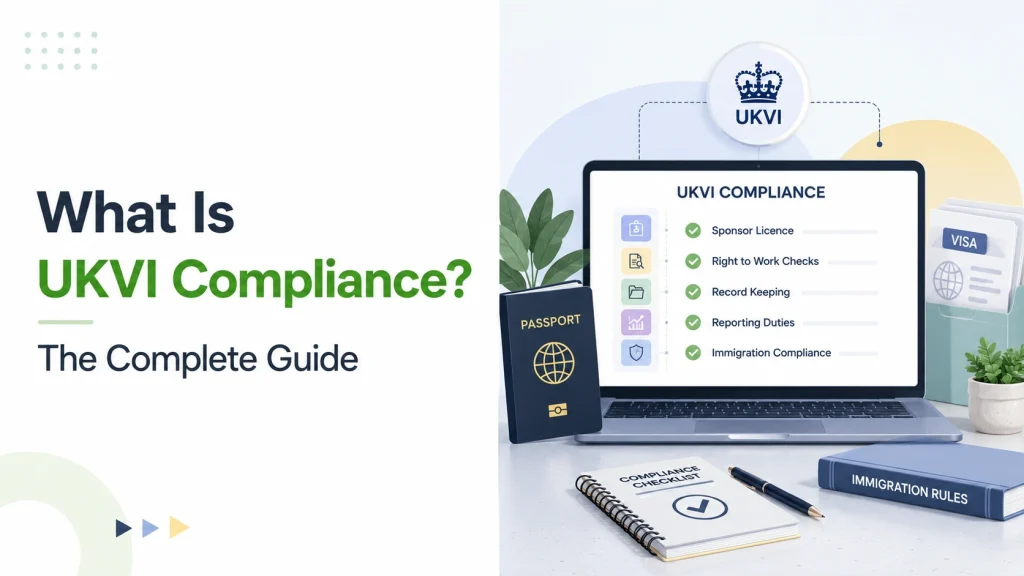
Hiring employees from overseas can help UK businesses access skilled talent, but it also comes with additional responsibilities. Employers must follow immigration rules, complete the correct checks, and keep accurate records throughout the employee lifecycle.
This is where UKVI compliance becomes essential.
UKVI compliance helps employers meet their immigration responsibilities, prevent illegal working, maintain accurate employee records, and ensure they follow Home Office requirements.
For businesses managing overseas employees, having the right processes in place can make compliance easier, reduce risks, and improve workforce management.
What Does UKVI Mean?
UKVI stands for UK Visas and Immigration.
It is part of the UK Home Office and manages immigration related matters, including:
- Visas
- Immigration permissions
- Right to work requirements
- Sponsor licences
- Immigration applications
For employers, UKVI focuses on ensuring that employees have the correct permission to work in the UK.
What Is UKVI Compliance?
UKVI compliance means following the rules and responsibilities set by UK immigration authorities when employing workers.
It involves making sure businesses:
- Check employees have the right to work
- Keep evidence of completed checks
- Maintain accurate immigration records
- Monitor important visa information
- Follow sponsor licence requirements
- Report relevant changes when required
UKVI compliance is not only about completing checks during hiring. It requires ongoing management throughout employment.
Who Needs to Follow UKVI Compliance Rules?
UKVI compliance applies to many UK employers, especially businesses that hire international workers.
This includes:
- Employers hiring overseas employees
- Businesses with sponsored workers
- Organisations with a sponsor licence
- Companies managing employees with time limited work permissions
Even businesses without sponsored workers must still complete appropriate right to work checks before employment begins.
UKVI Compliance vs Right to Work Checks
Right to work checks are one part of UKVI compliance.
A right to work check confirms whether an individual is legally allowed to work in the UK.
UKVI compliance covers wider employer responsibilities, including:
- Keeping employee records
- Monitoring immigration status
- Managing documentation
- Meeting sponsorship duties
- Maintaining compliance processes
A complete compliance approach helps employers manage immigration responsibilities beyond the initial hiring stage.
What Are Right to Work Checks?
Right to work checks are completed by employers to confirm that an employee has permission to work in the UK.
Employers should complete these checks before a person starts employment.
Checks may involve:
- Reviewing acceptable documents
- Using online verification systems
- Confirming work permissions
Businesses should keep evidence showing that checks were completed correctly.
Keeping this information organised helps employers demonstrate compliance if records are reviewed.
Why Is UKVI Compliance Important?
Failing to meet UKVI requirements can create serious problems for employers.
Potential issues include:
- Financial penalties
- Compliance action
- Sponsor licence problems
- Disruption to workforce planning
- Restrictions on hiring overseas workers
For businesses that rely on international talent, maintaining accurate records and following the correct processes is essential.
Strong UKVI compliance also helps businesses create a more organised onboarding experience for employees.
UKVI Compliance Checklist for Employers
A reliable UKVI compliance process should include:
Complete right to work checks
Employers should verify that employees have the correct permission before they begin work.
Maintain employee records
Businesses should keep accurate records of employee information and immigration documents.
Monitor visa expiry dates
Monitoring visa expiry dates helps employers take action early and avoid unexpected compliance issues.
Manage sponsor licence responsibilities
Businesses with sponsorship duties must follow the required rules and maintain accurate information.
Keep documentation organised
Important compliance documents should be easy to access when needed.
Sponsor Licence Compliance Responsibilities
Some UK employers hire workers through sponsorship routes.
In these cases, businesses have additional responsibilities.
Sponsor licence compliance may involve:
- Keeping worker information updated
- Maintaining required records
- Monitoring sponsored employees
- Reporting relevant changes
- Following sponsorship conditions
Failing to meet sponsor responsibilities can put a business’s ability to sponsor workers at risk.
Having clear processes makes it easier to manage these ongoing requirements.
Common UKVI Compliance Mistakes
Many compliance problems happen because businesses rely on manual processes.
Common mistakes include:
Missing right to work checks
Failing to complete checks before employment begins can create compliance issues.
Poor document management
Losing records or storing documents incorrectly can make it difficult to prove compliance.
Not tracking immigration deadlines
Businesses may miss important visa expiry dates or required actions.A compliance monitoring system can help businesses identify upcoming actions and maintain better visibility.
Inconsistent HR processes
Without standard processes, different employees may be managed differently.
Not updating employee information
Changes in employee circumstances should be recorded properly.
How HR Software Helps With UKVI Compliance
Managing UKVI compliance manually can become difficult as businesses grow.
HR software helps employers keep important employee information organised in one place.
It can help businesses:
- Store employee documents securely
- Manage employee records
- Track important dates
- Organise compliance information
- Improve HR processes
A dedicated compliance system can also help employers monitor actions that need attention and reduce the risk of missing important requirements.
Root HR helps businesses manage UKVI-related processes through tools designed for:
- UKVI compliance management
- Compliance tracking
- eVisa monitoring
- Sponsor compliance
By connecting employee information and compliance processes, businesses can create a more efficient approach to managing immigration responsibilities.
Benefits of Strong UKVI Compliance
A well-managed UKVI process helps businesses:
- Hire overseas talent confidently
- Reduce administrative mistakes
- Maintain accurate records
- Support smoother onboarding
- Protect business operations
- Improve workforce visibility
Compliance does not need to be complicated when businesses have the right systems and processes in place.
Final Thoughts
UKVI compliance is an important responsibility for UK employers hiring workers from overseas or managing employees with immigration requirements.
Following the correct processes helps businesses ensure employees have the right permission to work while maintaining accurate records and meeting Home Office expectations.
For growing organisations, managing immigration responsibilities alongside everyday HR tasks can become challenging. Manual processes can make it harder to track documents, monitor deadlines, and maintain visibility across the workforce.
Using digital HR tools can simplify UKVI compliance by helping employers organise records, monitor important information, and manage employee data more effectively.
A proactive approach to UKVI compliance allows businesses to stay prepared, reduce risk, and focus on building a successful workforce.