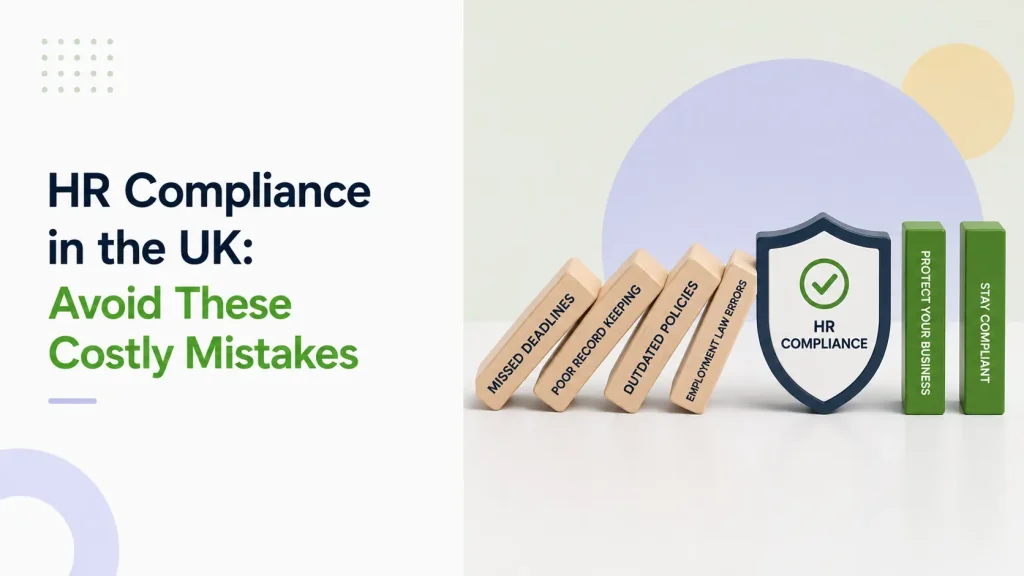
Running a business involves more than hiring employees and managing day-to-day operations. Employers also have a responsibility to follow workplace rules, maintain accurate records, and ensure their HR processes meet legal requirements.
This is where HR compliance becomes important.
For growing businesses, keeping up with employment responsibilities can become challenging. Without clear processes, organisations may face mistakes, missing documentation, or unnecessary risks.
HR compliance helps businesses create fair, consistent, and legally responsible ways of managing employees.
What Is HR Compliance?
HR compliance means ensuring a business follows the laws, regulations, and best practices that apply to managing employees.
It covers many areas of the employee lifecycle, including:
- Hiring
- Employment contracts
- Employee records
- Working hours
- Pay and benefits
- Holiday entitlement
- Workplace policies
- Employee rights
- Health and safety responsibilities
The aim of HR compliance is to protect both employers and employees.
Why Is HR Compliance Important?
Ignoring HR responsibilities can create problems for businesses.
Poor HR processes can lead to:
- Incorrect employee records
- Missed deadlines
- Inconsistent treatment of employees
- Disputes between employers and staff
- Compliance risks
For small businesses, these issues can be especially difficult because there may not be a dedicated HR team managing everything.
A structured HR process helps businesses stay organised and reduce unnecessary risk.
Key Areas of HR Compliance in the UK
1. Employment Contracts
Every employee should receive clear information about their employment terms.
Contracts typically include:
- Job title
- Responsibilities
- Pay details
- Working hours
- Holiday entitlement
- Notice periods
- Company policies
Keeping contracts accurate and accessible helps prevent misunderstandings.
2. Employee Records
Businesses need to maintain accurate employee information.
Important records may include:
- Employee details
- Contracts
- Right-to-work information
- Training records
- Performance notes
- Absence records
Keeping these records organised makes it easier to manage employees and respond to requests.
3. Working Hours and Shifts
Managing working time correctly is an important part of HR compliance.
Employers may need to track:
- Hours worked
- Shift patterns
- Breaks
- Overtime
- Employee availability
This can become complicated when teams have different schedules or multiple locations.
A digital HR system can help businesses maintain clearer records.
4. Holiday and Leave Management
Employees are entitled to paid holiday, and businesses must manage leave accurately.
Common HR challenges include:
- Calculating entitlement
- Managing different working patterns
- Tracking remaining leave
- Handling overlapping requests
Manual tracking can lead to mistakes, especially as teams grow.
5. Absence Management
Employee absence needs to be handled consistently.
Businesses should have processes for:
- Recording absences
- Managing return-to-work processes
- Supporting employees
- Monitoring absence trends
Clear absence management helps employers treat employees fairly.
6. Workplace Policies
Policies help employees understand expectations and procedures.
Common workplace policies include:
- Holiday policy
- Sickness policy
- Remote working policy
- Disciplinary policy
- Data protection policy
- Equal opportunities policy
Having clear policies improves consistency across the organisation.
HR Compliance Challenges for SMEs
Large organisations often have HR departments dedicated to compliance.
Small businesses usually have fewer resources, meaning HR responsibilities may fall on business owners or managers.
Common challenges include:
- Managing everything manually
- Keeping documents updated
- Remembering important dates
- Tracking employee changes
- Staying consistent
This is why many SMEs use HR software to simplify administration.
How HR Software Helps With Compliance
HR software provides businesses with tools to manage employee information more effectively.
It can help with:
Centralised employee records
Keep important employee information in one secure place.
Document management
Store contracts, policies, and HR documents digitally.
Automated reminders
Reduce the chance of missing important HR tasks.
Better visibility
Help managers quickly access the information they need.
Consistent processes
Support fair and repeatable HR workflows.
Common HR Compliance Mistakes Businesses Make
Some common mistakes include:
Not updating employee records
Outdated information can cause confusion and administrative problems.
Poor document management
Missing contracts or policies can create unnecessary risk.
Inconsistent processes
Different approaches for different employees can create fairness issues.
Relying only on spreadsheets
Manual systems become harder to maintain as businesses grow.
How SMEs Can Improve HR Compliance
Businesses can improve compliance by:
- Creating clear HR processes
- Keeping employee information organised
- Reviewing policies regularly
- Training managers
- Using suitable HR technology
Small improvements can make HR management much easier.
Final Thoughts
HR compliance is an essential part of running a responsible business.
For UK SMEs, having clear processes for contracts, employee records, leave, working hours, and policies helps reduce risk and creates a better workplace. Using a UKVI compliance software helps UK businesses manage these processes, maintain accurate records, and stay ready for Home Office audits.
The right HR systems can make compliance easier by turning manual tasks into organised, manageable processes.