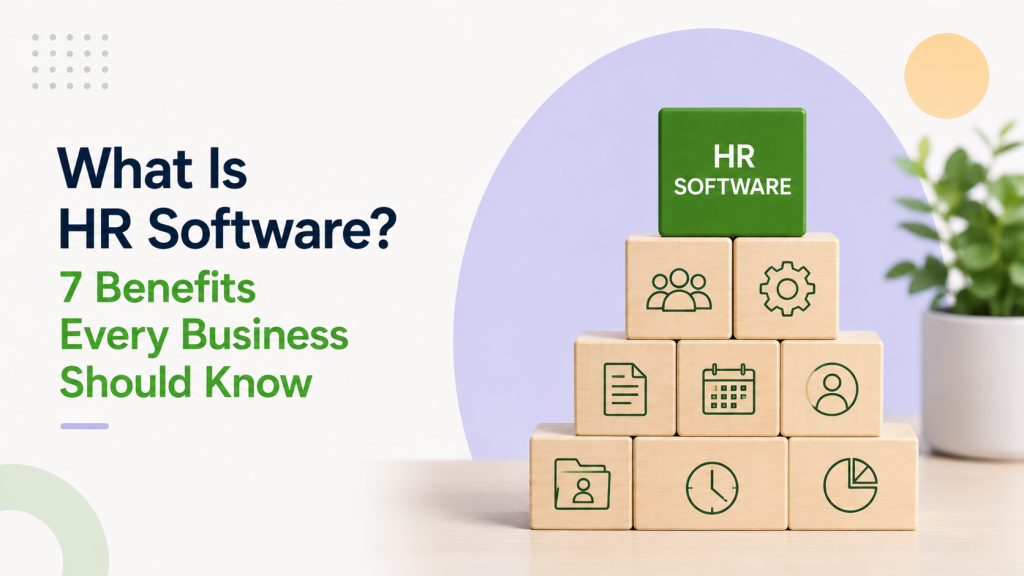
What is HR software? Before understanding what it is and how it helps businesses, it is important to know that managing employees involves far more than hiring people and processing payslips. Businesses need to keep track of employee records, contracts, holidays, absences, performance, documents, and workplace compliance.
For small and medium-sized businesses, handling all of this manually can quickly become difficult.
This is where HR software helps.
HR software gives businesses a central place to manage employee information, automate HR tasks, and improve the way they manage their workforce.
What Is HR Software?
HR software is a digital system that helps businesses manage their human resources processes.
Instead of storing employee information across spreadsheets, emails, paper documents, and different systems, HR software brings everything together in one secure platform.
A typical HR system can help businesses manage:
- Employee records
- Contracts and documents
- Holidays and leave
- Absence tracking
- Employee onboarding
- Performance management
- Workplace policies
- HR reporting
The goal is to make HR administration simpler, faster, and more accurate.
Why Do Businesses Need HR Software?
As a business grows, HR tasks become more complicated.
A small team may start with simple spreadsheets and shared folders, but problems often appear as employee numbers increase.
Common HR challenges include:
- Losing track of employee documents
- Manually updating records
- Missing important deadlines
- Difficult holiday calculations
- Poor visibility of employee information
- Spending too much time on admin tasks
HR software helps businesses replace manual processes with organised digital workflows.
What Does HR Software Do?
HR software can support many different areas of employee management.
1. Employee Record Management
One of the main purposes of HR software is keeping employee information organised.
Businesses can store details such as:
- Personal information
- Job roles
- Employment dates
- Contracts
- Important documents
- Training records
This creates one reliable source of employee information.
2. Managing Employee Documents
Keeping employment documents organised is important for compliance.
HR software can help businesses manage:
- Employment contracts
- Company policies
- Forms
- Digital documents
- Employee acknowledgements
Digital document management reduces the need for paper records and makes information easier to find.
3. Holiday and Absence Management
Tracking employee leave manually can become complicated, especially with different working patterns.
HR software can help businesses:
- Manage holiday requests
- Track remaining holiday entitlement
- Record absences
- Approve leave
- Maintain accurate records
This is especially useful for teams with both full-time and part-time employees.
4. Employee Onboarding
A strong onboarding process helps new employees settle into their role quickly.
HR systems can support onboarding by helping businesses:
- Collect employee information
- Share documents
- Complete joining tasks
- Introduce company processes
This creates a more consistent experience for new starters.
5. Performance Management
Many HR systems include tools for managing employee performance.
This can include:
- Setting goals
- Recording achievements
- Running reviews
- Supporting development plans
Regular performance management helps employees understand expectations and progress.
6. Rota and Shift Management
For businesses with changing schedules, managing shifts can become time-consuming.
HR softwares like Root HR with rota features can help employers:
- Create staff schedules
- Assign shifts
- Track availability
- Manage changes
- Reduce scheduling conflicts
This is particularly useful for industries such as retail, hospitality, healthcare, and customer services.
7. HR Reporting and Analytics
HR software can help businesses turn employee data into useful insights.
Instead of manually collecting information from different spreadsheets and systems, businesses can use HR reports to understand their workforce better.
HR systems can help with:
- Tracking employee data
- Monitoring attendance trends
- Reviewing absence patterns
- Analysing workforce information
- Creating HR reports
This helps businesses make better decisions, identify issues earlier, and improve their overall HR processes.
HR Software vs Spreadsheets
Many businesses start by managing HR using spreadsheets.
While spreadsheets can work for very small teams, they have limitations.
Spreadsheets:
- Require manual updates
- Can contain errors
- Are difficult to manage as teams grow
- May lack proper access controls
HR software:
- Keeps information centralised
- Automates repetitive tasks
- Improves accuracy
- Makes employee management easier
Moving from spreadsheets to a dedicated HR system can save significant administrative time.
Is HR Software Only for Large Companies?
No.
Modern HR software is often designed specifically for small and medium-sized businesses.
SMEs can benefit because they usually have fewer dedicated HR resources and need efficient ways to manage people.
A good HR system allows managers to handle important HR tasks without spending hours on administration.
How HR Software Helps With Compliance
UK businesses have responsibilities around employee records, contracts, working hours, holidays, and workplace policies.
Managing these manually increases the risk of mistakes.
HR software helps by:
- Keeping records organised
- Creating clear processes
- Improving document management
- Supporting consistent HR practices
It gives businesses better visibility over important employee information.
How to Choose HR Software
When choosing an HR system, businesses should consider:
Ease of use
The software should be simple enough for managers and employees to use daily.
Features
Look for tools that match your needs, such as:
- Employee records
- Holiday management
- Absence tracking
- Documents
- Rotas
- Performance management
Scalability
The system should support your business as your team grows.
Security
Employee information should be stored safely with appropriate controls.
Final Thoughts
HR software helps businesses move away from manual HR administration and create simpler, more organised ways of managing employees.
For UK SMEs, the right HR system can reduce admin work, improve accuracy, support compliance, and give managers more time to focus on their people.
As businesses grow, having a reliable HR platform becomes less of a luxury and more of a practical necessity.