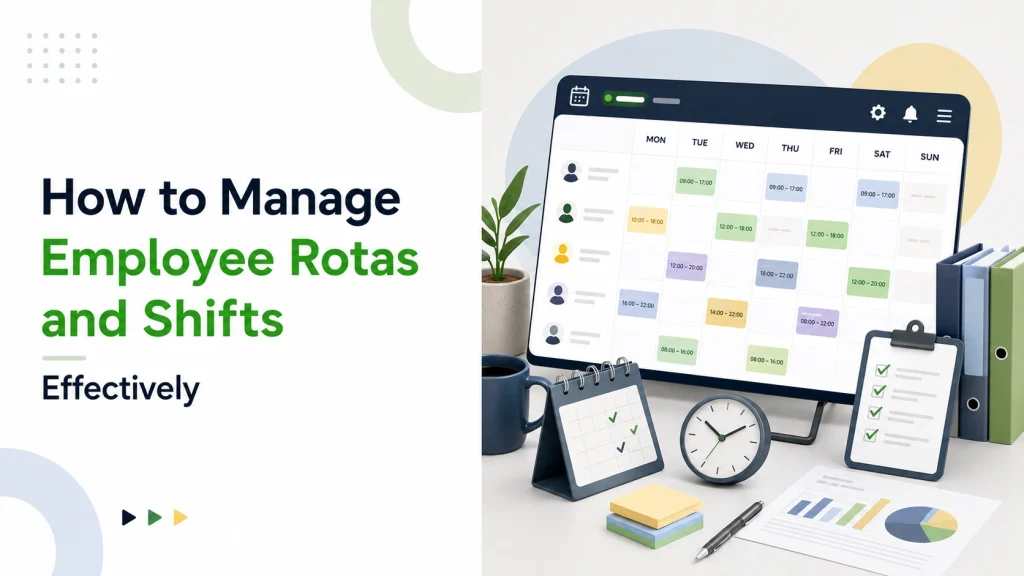
What is rota management? Rota management is the process businesses use to organise employee shifts, plan schedules, and ensure the right people are available at the right time. A clear rota management process helps businesses improve workforce planning, track working hours, and keep teams organised.
Whether you run a retail business, hospitality team, healthcare organisation, or growing SME, having an effective way to manage employee schedules is essential.
A poorly managed rota can lead to:
- Staff shortages
- Scheduling conflicts
- Unhappy employees
- Increased admin work
- Poor customer experience
A clear Rota management process helps businesses plan shifts efficiently and keep teams organised.
What Is a Staff Rota?
A staff rota is a schedule that shows when employees are expected to work.
It usually includes:
- Employee names
- Working days
- Shift times
- Locations
- Responsibilities
Rotas help employees understand their schedules and help managers make sure the business has enough coverage.
Why Is Rota Management Important?
Understanding what is rota management and how it works can help businesses create better schedules, reduce staffing issues, and improve day-to-day operations. Effective rota management helps businesses:
Improve workforce planning
Managers can see who is available and plan staffing levels more effectively.
Reduce scheduling mistakes
Clear rotas reduce confusion about working hours and responsibilities.
Support employees
Employees have better visibility of their shifts and can plan ahead.
Control costs
Businesses can avoid unnecessary overtime and overstaffing.
Common Problems With Manual Rota Management
Many businesses start by creating rotas using spreadsheets, documents, or messages.
While this may work for small teams, problems often appear as the business grows.
Common issues include:
Last-minute changes
Employees may need shift swaps, availability changes, or cover.
Managing these manually can become difficult.
Poor communication
If employees cannot easily access their schedule, mistakes are more likely.
Tracking working hours
Different employees may have different:
- Hours
- Contracts
- Availability
- Shift patterns
Keeping everything updated manually takes time.
How to Create an Effective Employee Rota
A good rota should:
Understand employee availability
Before creating schedules, managers should know:
- Who can work certain shifts
- Employee preferences
- Holiday requests
- Existing commitments
Balance workloads
Shifts should be distributed fairly across employees.
Plan ahead
Creating rotas in advance gives employees time to prepare.
Keep records accurate
Working hours should match employee contracts and agreed schedules.
Managing Full-Time and Part-Time Employees
Businesses often have a mixture of employee types.
For example:
- Full-time employees and Part-time employees
- Temporary staff
- Flexible workers
Each group may have different availability and working patterns.
A good rota system makes managing different schedules easier.
Rota Management and Compliance
Shift planning is not only about organisation.
Employers also need to consider:
- Working hours
- Rest periods
- Employee agreements
- Accurate time records
Poor rota management can create unnecessary HR problems.
How HR Software Helps With Rotas
An HR software can make rota management much easier.
A rota system can help businesses:
- Create employee schedules
- Manage shift changes
- Track working hours
- View availability
- Store employee information
- Reduce manual admin
Instead of managing multiple spreadsheets and messages, managers can handle schedules in one place.
Benefits of Digital Rota Management
Using a digital rota system can help businesses:
Save time
Managers spend less time creating and updating schedules.
Improve communication
Employees can access their shifts more easily.
Reduce errors
Automated systems reduce manual mistakes.
Support growing teams
Businesses can manage larger teams without increasing admin workload.
The Future of Rota Management for UK Businesses
Effective rota management helps businesses keep teams organised, improve communication, and maintain the right staffing levels. A well-planned rota ensures employees know when they are expected to work, while managers can make sure every shift is covered efficiently.
For growing UK businesses, understanding what is rota management and implementing a structured approach can help reduce scheduling mistakes, improve employee visibility, and save valuable admin time. Relying on manual scheduling methods such as spreadsheets, documents, or messages can quickly become time-consuming and difficult to manage.
Using digital HR tools can make rota management much easier by allowing businesses to create schedules, manage shift changes, track working hours, and keep employee information organised in one place.
With the right rota system, businesses can improve workforce planning, support employees, reduce unnecessary admin, and create a smoother day-to-day operation. For organisations managing shift-based teams, investing in effective rota management can make a significant difference to productivity and employee experience.