
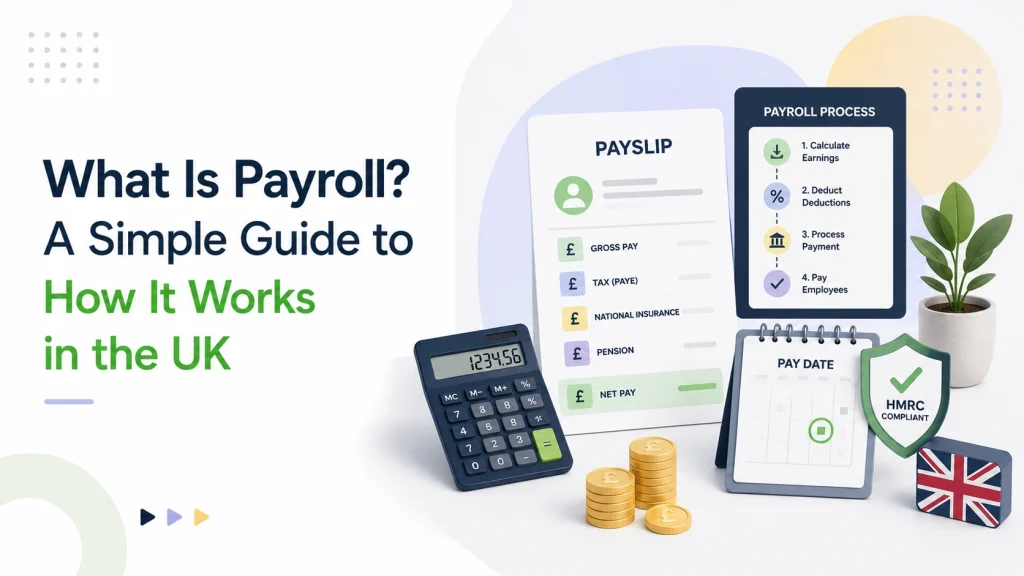
What Is Payroll?
Payroll is one of the most important processes in any business. Every organisation with employees needs a reliable way to calculate pay, maintain records, and make sure employees are paid accurately and on time.
For many small and medium-sized businesses, payroll can become a complicated administrative task. Managing employee details, working hours, deductions, and compliance requirements manually can take significant time.
Understanding how payroll works helps employers create better processes, reduce errors, and ensure employees receive the correct payments.
What Is Payroll?
Payroll is the process businesses use to calculate, manage, and distribute employee payments.
It includes everything involved in paying employees, from recording working hours to preparing payslips and maintaining payroll records.
Payroll typically covers:
- Employee wages and salaries
- Working hours and overtime
- Tax deductions
- National Insurance contributions
- Payslips
- Payment records
- Payroll reporting
A good payroll process ensures employees are paid correctly while helping businesses meet their legal responsibilities.
How Does Payroll Work?
The payroll process involves several steps to make sure employee payments are accurate.
1. Collecting Employee Information
Businesses need accurate employee information before processing payments.
This may include:
- Employee personal details
- Salary information
- Working hours
- Bank details
- Tax information
- Employment status
Keeping this information organised helps reduce mistakes and makes payroll processing smoother.
2. Recording Working Hours
For employees paid based on hours worked, businesses need accurate time records.
This can include:
- Regular working hours
- Overtime
- Shift patterns
- Absences
- Holiday periods
Tracking working time correctly is important, especially for businesses with flexible schedules or multiple employee types.
3. Calculating Employee Pay
Payroll calculations determine how much each employee should receive.
This may involve:
- Basic salary
- Hourly pay
- Overtime payments
- Bonuses
- Allowances
- Deductions
Accurate calculations are essential to avoid incorrect payments, employee dissatisfaction, and additional administration.
4. Managing PAYE and Deductions
UK employers must manage deductions correctly through payroll, including PAYE tax and National Insurance contributions.
These may include:
- Income tax
- National Insurance contributions
- Other agreed deductions
Employers must make sure deductions are calculated correctly and reported properly. Errors can create compliance issues and require additional corrections.
5. Providing Payslips
Employees should receive clear information about their earnings.
Payslips usually show:
- Gross pay
- Deductions
- Net pay
- Payment details
Digital payslips are now commonly used by businesses because they make information easier for employees to access.
Why Is Payroll Important?
Payroll is not only about paying employees. It also helps businesses maintain accurate financial and employee records.
A reliable payroll process helps businesses:
- Build trust with employees
- Maintain accurate records
- Support financial planning
- Meet legal requirements
- Reduce administrative work
When payroll is managed properly, employees can focus on their roles without worrying about payment issues.
Payroll Responsibilities for UK Employers
Employers have several responsibilities when managing payroll.
These include:
- Paying employees accurately and on time
- Keeping payroll records
- Reporting required information
- Making correct deductions
- Protecting employee data
Payroll information contains sensitive employee details, so businesses must also ensure records are stored securely.
Common Payroll Challenges for SMEs
Small businesses often manage payroll alongside other HR responsibilities, which can make the process more challenging.
Some common payroll challenges include:
Manual Calculations
Spreadsheets and manual processes can increase the risk of mistakes. Even a small error in hours, deductions, or salary details can affect employee payments.
Managing Different Contracts
Businesses may have different types of employees, including:
- Full-time employees
- Part-time employees
- Temporary workers
- Flexible workers
Each employee type may have different pay arrangements, making payroll management more complex.
Keeping Records Updated
Employee information changes regularly and must be reflected in payroll.
Examples include:
- Salary changes
- New starters
- Leavers
- Working pattern changes
- Updated employee details
Keeping records current helps prevent payroll errors.
Payroll vs HR: What Is the Difference?
Payroll focuses mainly on employee payments, while HR focuses on managing the wider employee relationship.
HR responsibilities include:
- Employee records
- Contracts
- Performance management
- Absence tracking
- Workplace policies
- Employee development
However, payroll and HR work closely together. Accurate HR information makes payroll processing easier and helps businesses maintain better employee records.
How HR Software Helps With Payroll Management
Modern HR software helps businesses keep employee information organised and accessible. Using payroll software can help businesses record employee details, calculate pay, manage deductions, and keep payroll information organised.
It can support payroll processes by helping manage:
- Employee records
- Working hours
- Leave information
- Contract details
- Employee changes
Having accurate employee data reduces manual work, improves efficiency, and helps businesses avoid unnecessary payroll issues.
Payroll Mistakes Businesses Should Avoid
Some common mistakes include:
- Incorrect employee information
- Missing employee updates
- Poor record keeping
- Manual calculation errors
- Failing to organise documents
Using structured HR processes and digital tools can help businesses reduce these risks.
Final Thoughts
Payroll is a critical business process that affects both employees and employers.
For growing UK businesses, managing payroll accurately requires good organisation, reliable records, and clear processes.
While payroll can be time-consuming, the right HR tools can simplify employee management, improve accuracy, and reduce unnecessary administration. A well-managed payroll system supports a more efficient workplace and helps businesses stay compliant.