
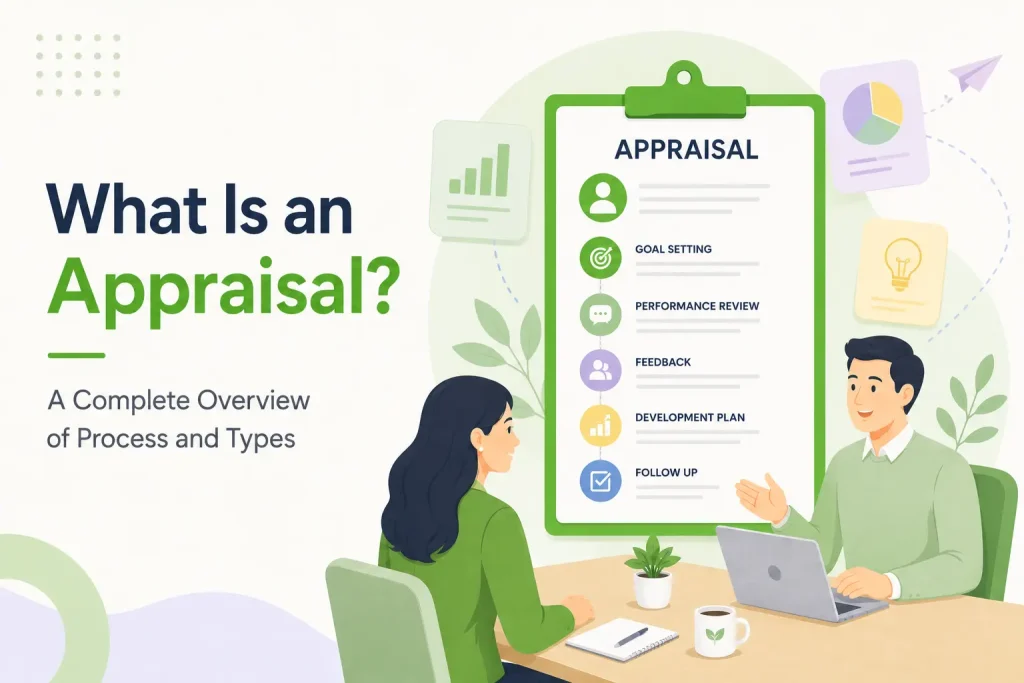
What Is an Appraisal?
An appraisal is a formal conversation between an employee and their manager to review performance, discuss achievements, identify areas for improvement, and set future goals.
For businesses, appraisals provide a structured way to understand how employees are progressing and how they can continue to develop. For employees, they create an opportunity to share feedback, discuss career goals, and get support for their professional growth.
While traditional appraisals were often annual reviews, many modern businesses now use more frequent performance conversations supported by HR technology.
What Is an Appraisal at Work?
At work, an appraisal is a performance review process where managers and employees discuss:
- Recent achievements and challenges
- Job performance and responsibilities
- Skills and development opportunities
- Future objectives
- Training requirements
A well managed appraisal is not just about reviewing past performance. It helps employees and businesses plan ahead.
For growing UK businesses, having a clear appraisal process can improve communication, increase engagement, and support better workforce management.
Why Are Appraisals Important?
Employee performance can be difficult to measure without regular conversations and feedback.
Appraisals help create a clear connection between an employee’s daily work and wider business goals.
Benefits for employees
A good appraisal can help employees:
- Understand what they are doing well
- Receive constructive feedback
- Identify areas for improvement
- Discuss career development
- Set achievable goals
Benefits for employers
Businesses use appraisals to:
- Track employee performance
- Identify skills gaps
- Plan training
- Improve employee engagement
- Support retention
When employees understand expectations and receive regular feedback, they are more likely to stay motivated and productive.
What Happens During an Appraisal Meeting?
An appraisal meeting is usually a private discussion between an employee and their line manager.
The exact format depends on the organisation, but most appraisal meetings include:
1. Reviewing previous goals
The manager and employee discuss objectives that were set during the previous review period.
This includes looking at:
- Completed tasks
- Achievements
- Challenges faced
- Progress against targets
2. Discussing performance
The conversation focuses on what has gone well and where improvements can be made.
A strong appraisal should be a two-way discussion rather than a one-sided evaluation.
3. Setting future goals
The employee and manager agree on future objectives, priorities, and development plans.
These goals should be realistic, measurable, and connected to business needs.
What Should Be Included in an Appraisal?
A complete appraisal usually covers:
Employee achievements
This includes key projects, completed work, contributions, and successes.
Performance feedback
Managers provide feedback on strengths and areas where the employee can improve.
Development plans
The discussion may include:
- Training opportunities
- New skills to develop
- Career progression
- Additional responsibilities
Future objectives
Clear goals help employees understand what is expected and how success will be measured.
Types of Appraisal Methods
Different businesses use different appraisal approaches depending on their goals and workplace culture.
1. Annual Appraisal
The traditional approach is a yearly performance review.
It allows businesses to review the employee’s progress over the previous year and plan future objectives.
However, many organisations now combine annual reviews with regular check-ins.
2. 360-Degree Feedback
A 360-degree appraisal collects feedback from multiple people, including:
- Managers
- Team members
- Colleagues
- Customers
This gives a wider view of an employee’s performance.
3. Self-Appraisal
A self-appraisal allows employees to review their own work before meeting their manager.
Employees may reflect on:
- Their achievements
- Challenges
- Skills
- Future goals
This encourages employees to take ownership of their development.
4. Continuous Performance Reviews
Many modern businesses are moving away from only yearly reviews.
Continuous feedback involves regular conversations about:
- Progress
- Goals
- Performance
- Support needed
This approach helps problems get addressed earlier and keeps employees engaged.
How to Prepare for an Appraisal
Preparation helps employees and managers get more value from the conversation.
Before an appraisal, employees should think about:
- Their biggest achievements
- Challenges they faced
- Skills they want to improve
- Support they need
- Future career goals
Managers should prepare by reviewing:
- Previous objectives
- Employee contributions
- Performance notes
- Development opportunities
A prepared appraisal creates a more productive discussion.
Are Appraisals Required by Law in the UK?
No, employee appraisals are not legally required in the UK.
However, many employers use them as part of good performance management practices.
A structured appraisal process can help businesses maintain:
- Fair decision-making
- Clear communication
- Employee development records
- Consistent performance discussions
Using HR software can also help businesses securely store performance information and maintain accurate employee records.
You can read more about UK employment rights on official government guidance.
Common Appraisal Mistakes to Avoid
Even with good intentions, appraisal processes can become ineffective.
Common mistakes include:
Only reviewing performance once a year
Waiting 12 months between conversations can mean important feedback is delayed.
Setting unclear goals
Employees need clear expectations to understand what success looks like.
Making the conversation one-sided
An appraisal should allow employees to share their thoughts, concerns, and ideas.
Failing to follow up
A good appraisal should lead to action, not just a completed form.
How HR Software Can Improve Appraisals
Managing appraisals manually can become difficult as businesses grow.
HR software helps simplify the process by allowing organisations to:
- Schedule review cycles
- Store employee records
- Track goals
- Manage feedback
- Keep documentation organised
Digital HR tools also make it easier for managers and employees to access important information when needed.
Final Thoughts
Understanding what is an appraisal helps businesses create better communication between employees and managers.
A successful appraisal is more than a yearly meeting. It is an opportunity to recognise achievements, support development, and align employee goals with business objectives.
With the right process and HR technology, businesses can turn appraisals into a valuable tool for improving performance, engagement, and employee growth.