
Overtime & Exceptions
Spot overtime, attendance issues and working-hour exceptions in one place
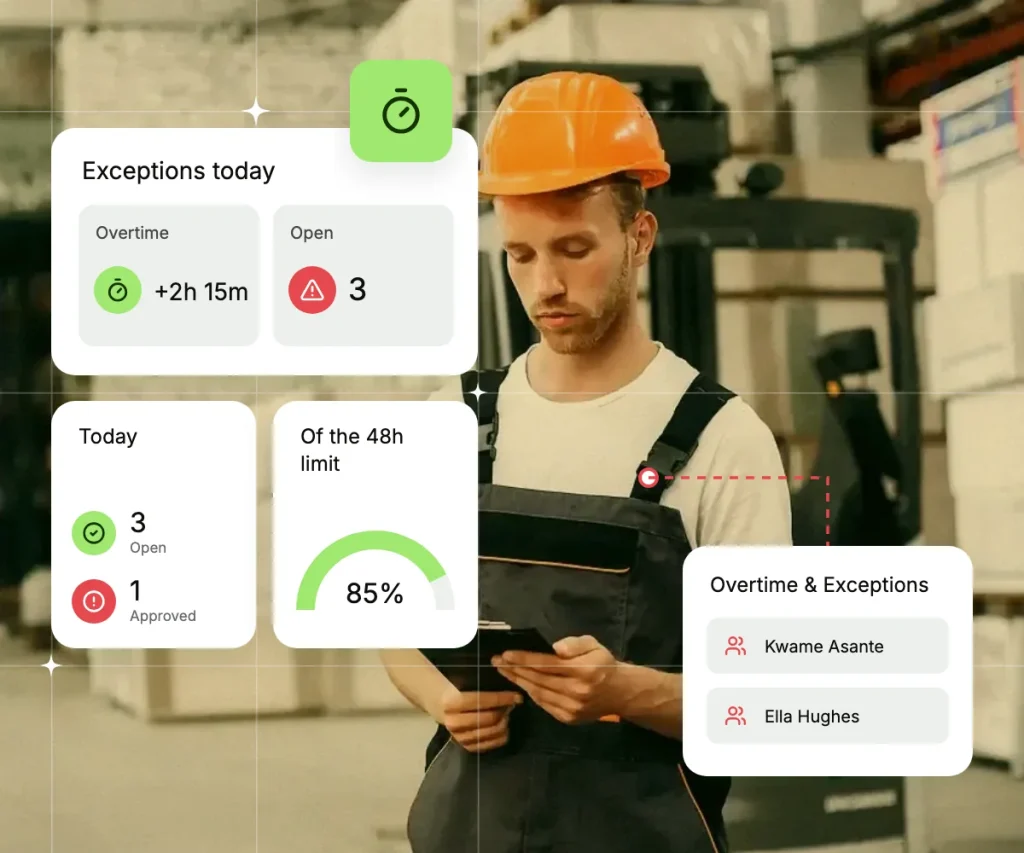
RootHR’s Overtime & Exceptions feature gives UK employers one central place to monitor overtime, missed attendance, working-time limits and sponsorship-related hour issues — all connected to the wider RootHR platform.
No card required · UK-based support · ISO 27001 certified
30%
Less scheduling time
99%
Time data accuracy
0
Missed payrolls
Multi-site
From day one
The basics
What are working-time exceptions?
Working-time exceptions are situations where recorded hours need attention because they fall outside the rules, limits or working patterns your organisation is monitoring.
For most adult workers in the UK, average weekly working time should normally not exceed 48 hours over a 17-week reference period unless a valid opt-out or another applicable exception applies.
RootHR compares attendance records with relevant working-time, contract and sponsorship information, then brings anything that needs attention into one review process rather than leaving managers to check separate reports.
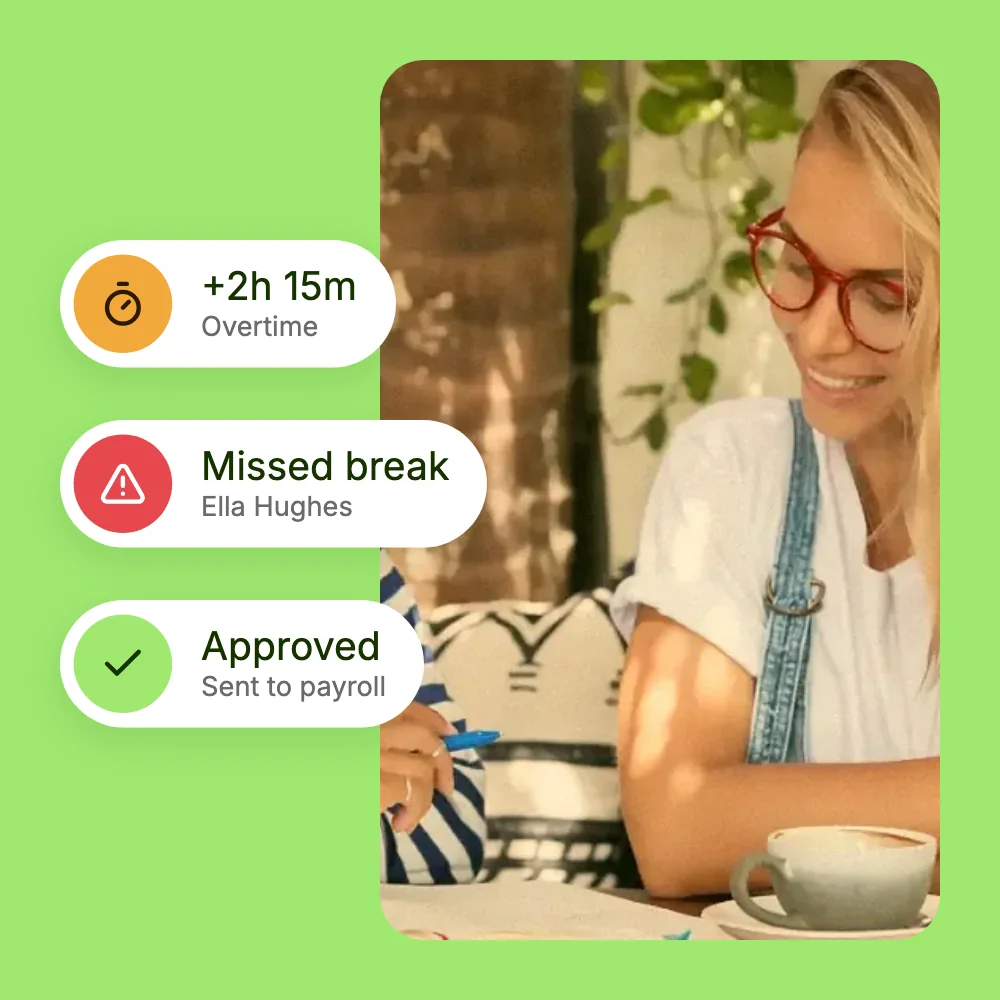
Every exception in one monitored queue
Bring overtime, attendance issues and working-hour alerts together so managers can see what needs reviewing as it happens.
Working-time alerts
Monitor recorded working hours against the rules and thresholds relevant to your workforce.
48-hour average
Keep the UK 48-hour average working-week position visible using recorded attendance data.
Overtime exceptions
Highlight employees whose hours move beyond the overtime thresholds your organisation monitors.
One review queue
Bring different hour and attendance exceptions into one place rather than checking several separate reports.
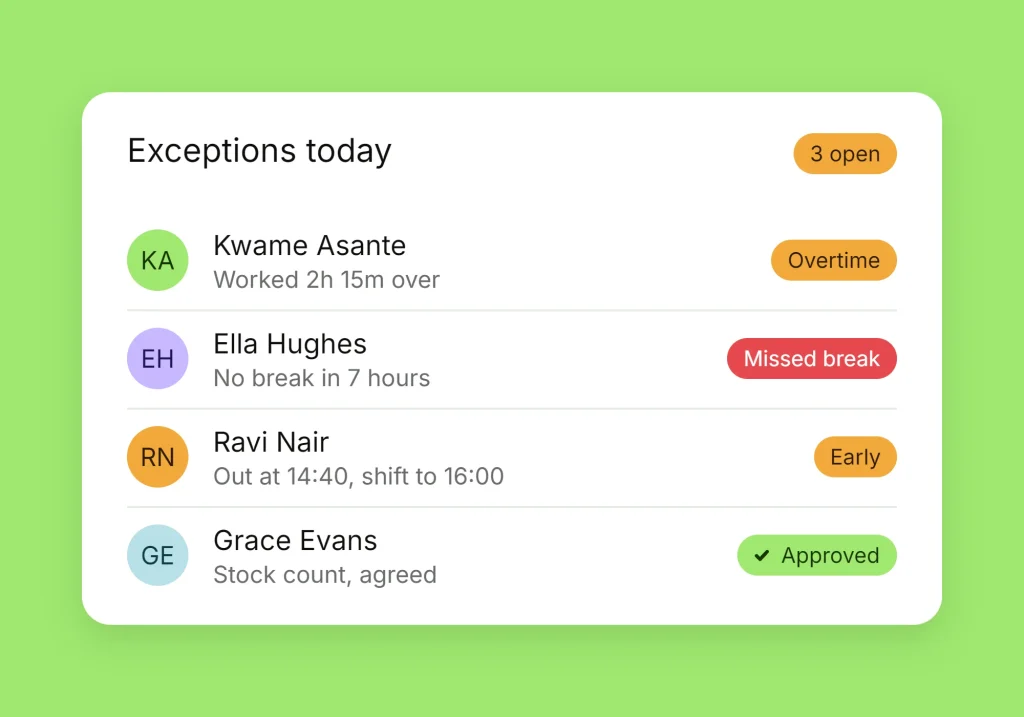
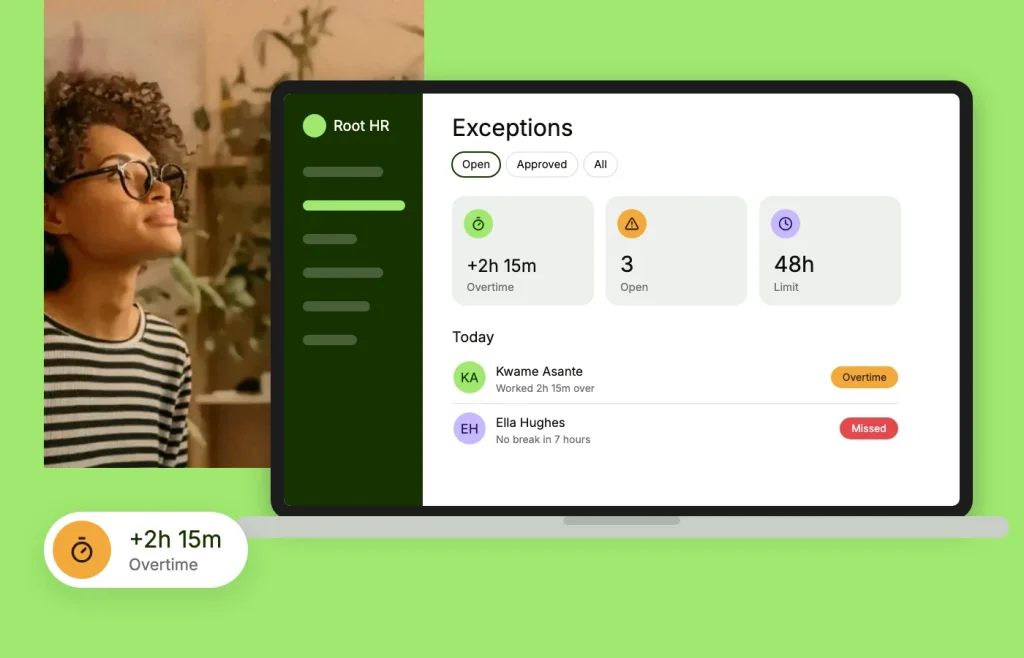
Every exception lands in one queue
Working-time, attendance and relevant sponsorship-related alerts can be brought into the same review queue, giving managers one place to see what needs attention and what has already been reviewed.
How it works
From clock-in to exception
RootHR uses the attendance records already captured across the platform and checks them against the rules and thresholds relevant to each employee.
01
Hours come from attendance
Clock-ins, breaks and approved corrections provide the working-hour records used for exception monitoring, without entering the same information again.
02
Relevant checks are applied
Recorded hours can be checked against working-time limits, contracted hours, overtime thresholds and relevant sponsorship information.
03
Valid exceptions are considered
Approved leave, recorded opt-outs and other relevant employee information can be taken into account before an issue is presented for review.
04
Issues move into the queue
Items that still need attention are brought into a monitored review queue so managers can investigate and take the appropriate action.

What gets flagged
Keep important working-hour exceptions visible
RootHR can monitor different types of hour and attendance issues using the employee, attendance and compliance information already held in the platform.
Sponsorship hour alerts
Compare recorded hours with relevant sponsorship and employment information to highlight records that may need review.
Working Time limits
Monitor average weekly working hours and keep relevant Working Time information visible to managers.
Contracted-hours exceptions
Flag employees whose recorded hours move beyond the contracted-hours thresholds your organisation chooses to monitor.
Overtime spikes
Bring unusual increases in overtime to a manager’s attention before they disappear into a monthly total.
Opt-outs recorded
Keep valid Working Time opt-out information connected to the employee record when reviewing average weekly hours.
Approved leave recognised
Use approved leave information alongside attendance so planned absence is not treated like unexplained missing time.
Attendance exceptions
Highlight missing clock-ins, missed clock-outs and other attendance records that need checking.
Employee-specific rules
Apply the relevant information held against each employee rather than treating every worker in exactly the same way.
The records behind every flag
Exception monitoring is only useful when the working-hour data underneath it is clear and up to date.
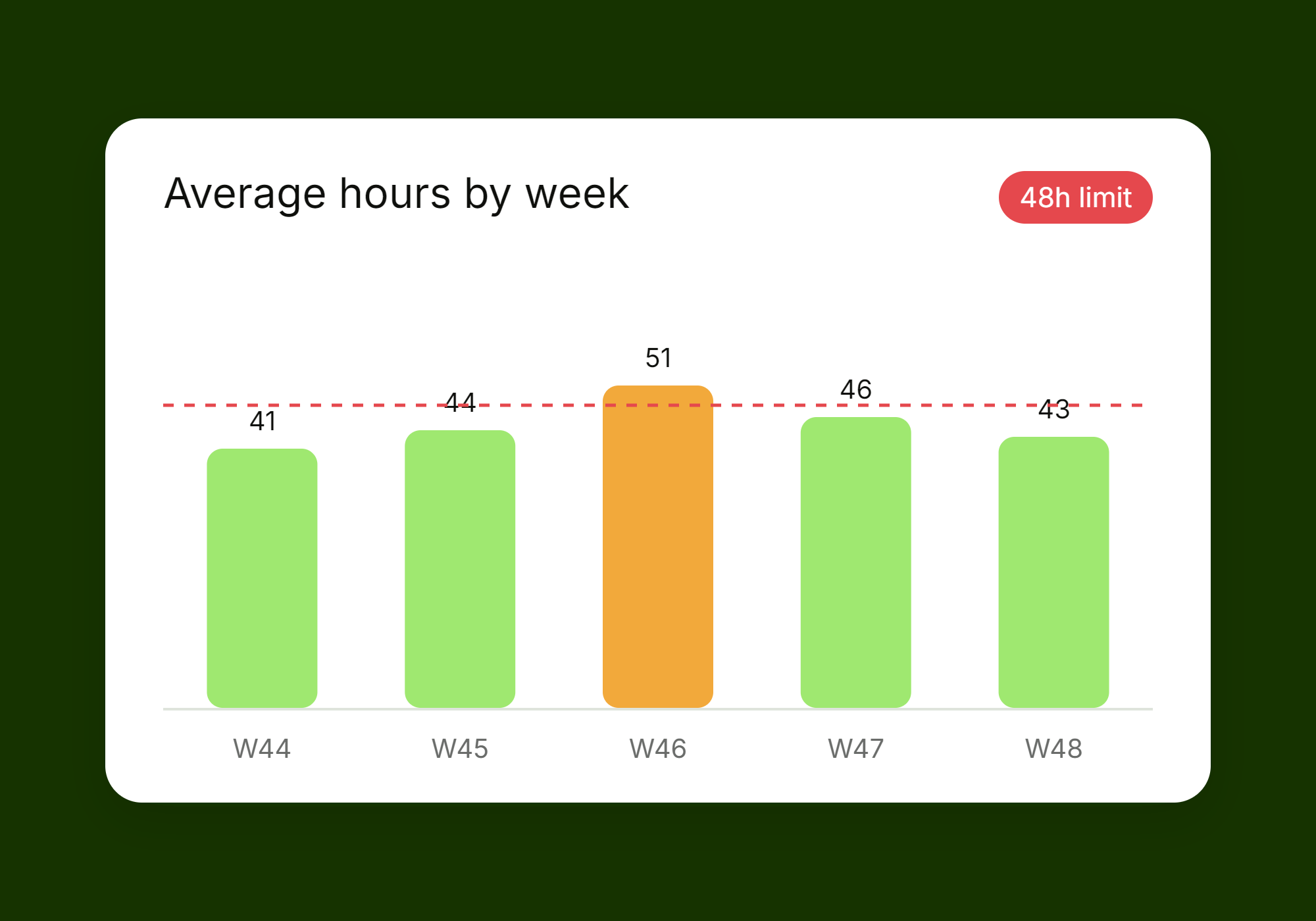
The hours the checks use
Review weekly hours, missing attendance and approved corrections from the same attendance information used across RootHR.
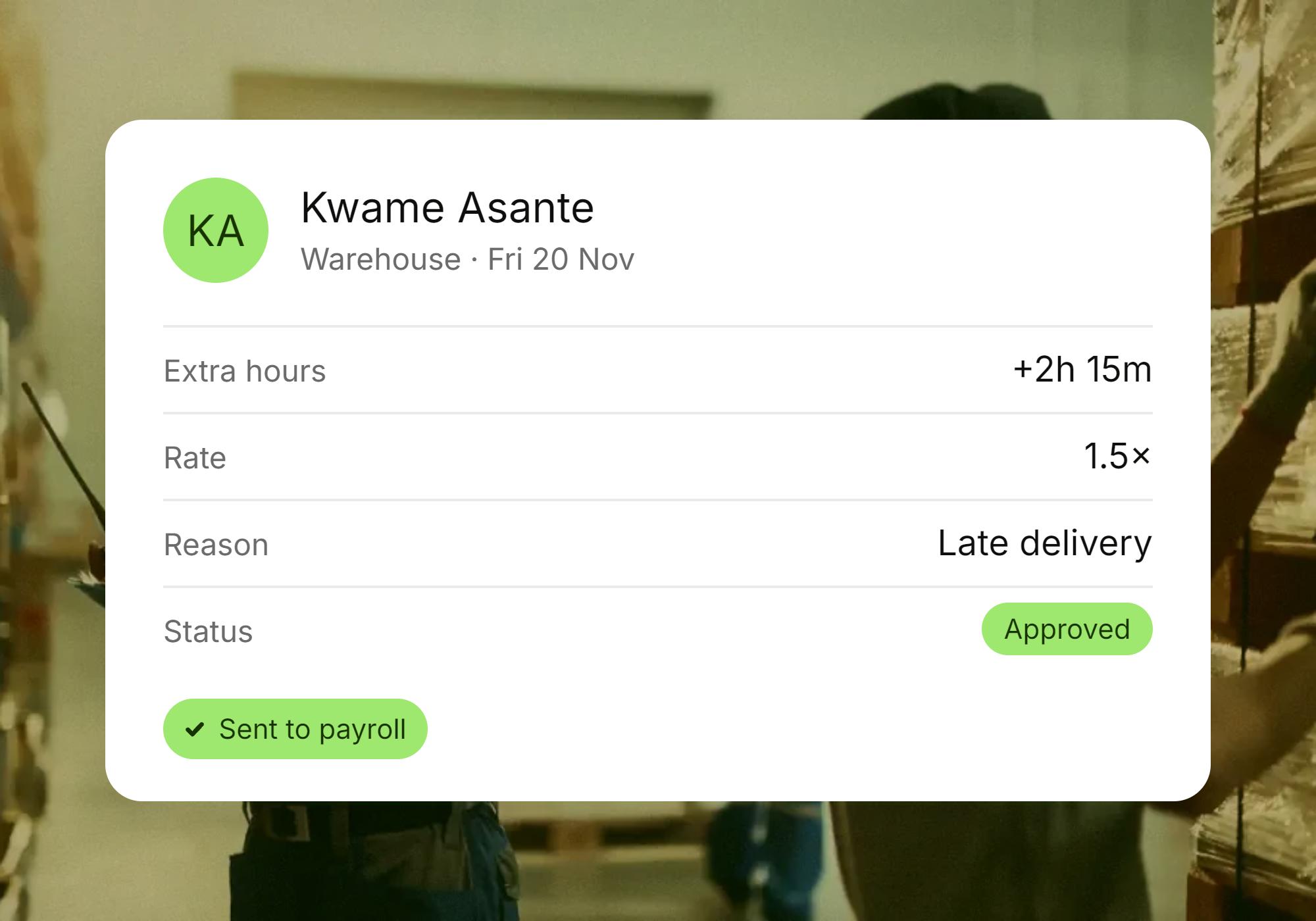
Hours against contract
Compare recorded working time with contracted hours so managers can identify unusual overtime or hour patterns more easily.
Why it matters
Small hour issues can become bigger compliance problems
A missed clock-out, unexpected overtime or an unexplained change in a sponsored worker’s pattern can be easy to overlook on its own.
RootHR keeps these issues visible so your team can review the underlying record and decide what action, if any, is required.
Bring working-hour exceptions into one review queue
- Keep Working Time information connected to attendance records
Monitor sponsorship-related hour patterns alongside wider compliance data
Review issues before they move into payroll or compliance reporting

Reporting
Exceptions grouped, counted and ready to review
The exception queue shows what needs attention now, while reporting helps managers see patterns across employees, attendance and working hours.
Keep overtime and hour issues visible as their own category
Review employee-level exception history
Keep attendance issues alongside working-hour records
Separate current issues from older reviewed records

What feeds the queue and what it connects to
Overtime and exception monitoring works best when attendance, rota, leave and employee records are already connected.
Attendance & Time
Use recorded clock-ins, breaks and approved corrections as the basis for working-hour checks.
Rota Management
Compare scheduled working patterns with the hours employees actually record.
Leave Management
Keep approved time off connected to attendance and working-hour calculations.
Compliance Radar
Bring relevant working-hour issues into the wider compliance picture alongside other records and deadlines.
Sponsor Compliance
Keep sponsorship-related employment information and relevant working-hour alerts connected.
Payroll Support
Review attendance and overtime issues before approved hours move into the payroll process.
Overtime & Exceptions
Frequently asked questions
What types of exceptions can RootHR monitor?
RootHR can highlight overtime, missing attendance, working-time issues, contracted-hours exceptions and relevant sponsorship-related hour patterns using the information held across the platform.
How does the 48-hour working week check work?
For most adult workers, UK rules limit average weekly working time to 48 hours, normally averaged over 17 weeks. RootHR can use recorded working hours to help managers monitor that position.
What happens if an employee has opted out of the 48-hour limit?
A valid opt-out can be recorded against the employee so it can be taken into account when reviewing their working-time position.
Does approved leave appear as an attendance problem?
Approved leave can be recognised alongside attendance records so planned time away is not treated in the same way as unexplained absence.
Are sponsorship working-hour rules the same for every employee?
No. Sponsorship and immigration circumstances can differ between workers. RootHR keeps relevant employee and sponsorship information connected so managers can review alerts in the right context.
See your exception queue in RootHR
Bring overtime, attendance and working-hour exceptions together with the employee records your team already manages.