
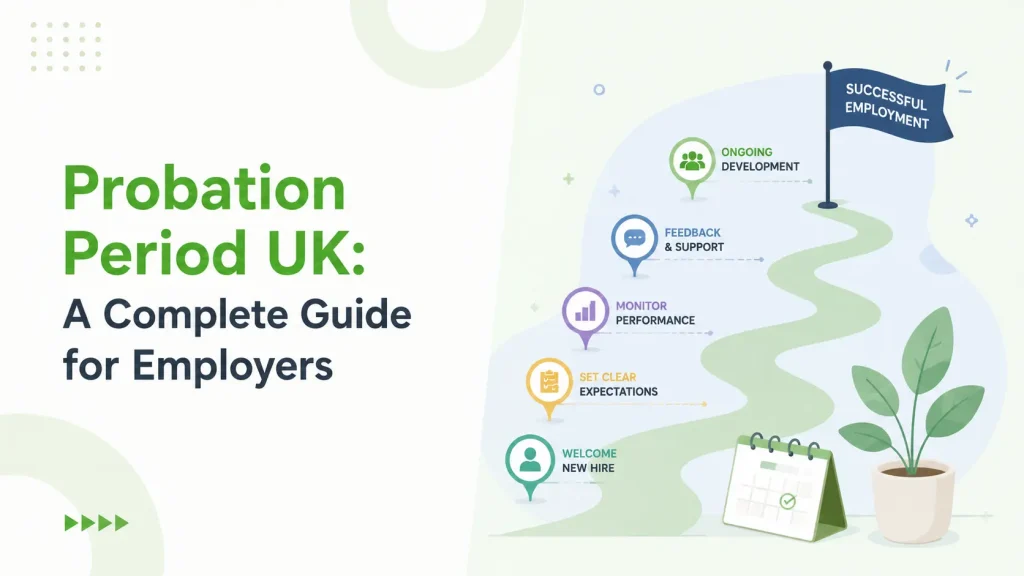
When a new employee joins a business, the first few months are important for both the employer and the employee. A probation period gives both sides time to understand whether the role, expectations, and working relationship are the right fit.
For UK businesses, especially growing SMEs, having a clear probation process helps create a smoother onboarding experience, improve communication, and support better hiring decisions.
In this guide, we explain what a probation period is, how long it usually lasts, employee rights, and how businesses can manage probation effectively.
What is a probation period?
A probation period is a trial period at the start of employment where an employer assesses a new employee’s performance, behaviour, skills, and suitability for the role.
During this time, employees also get the opportunity to decide whether the company, responsibilities, and workplace culture meet their expectations.
A probationary period is usually included in an employment contract. While it is not legally required in the UK, many businesses use it as part of their hiring and onboarding process.
A well-managed probationary period helps employers:
- Understand how a new employee performs in the role
- Set clear expectations from the beginning
- Identify training or support needs
- Make informed decisions about long-term employment
How long is a probation period in the UK?
There is no fixed legal length for a probation period UK employers must follow.
Most businesses typically use:
- 3 months for many standard roles
- 6 months for senior or specialist positions
The length of probation should be clearly stated in the employee’s contract.
Some businesses may extend a probationary period if they need more time to assess performance or if the employee has had limited opportunity to demonstrate their abilities.
Is a probation period required by law?
No, employers are not legally required to have a probationary period.
However, if a business chooses to include one, the terms should be clearly explained in the employment contract.
A probation period does not remove an employee’s basic workplace rights. Employees are still entitled to protections such as:
- Minimum wage requirements
- Working time protections
- Statutory leave entitlements
- Protection from discrimination
Probation allows employers to assess suitability, but it does not mean employees have no rights.
What happens during a probation period?
A successful employee probation period should involve regular communication between the employee and manager.
During probation, employers usually focus on:
Performance
Managers review whether the employee is meeting expectations and completing responsibilities effectively.
Attendance and reliability
Businesses may monitor attendance, punctuality, and overall professionalism.
Training and development
New employees often need time to learn processes, systems, and company procedures.
Workplace fit
Probation also helps both sides understand whether the role and company culture are suitable.
Probation period notice rules
Notice periods during probation are usually shorter than after an employee becomes fully established in their role.
The notice period should be included in the employment contract.
Many businesses use a shorter notice period during probation, allowing both the employer and employee more flexibility if the role is not the right match.
Can an employee be dismissed during probation?
Yes, an employee can be dismissed during a probation period.
However, employers should still handle the process fairly and professionally.
Businesses should:
- Provide feedback about concerns
- Give employees the opportunity to improve where appropriate
- Follow the notice terms in the contract
- Avoid decisions based on discrimination or protected characteristics
Keeping clear records of performance discussions can help businesses manage probation decisions properly.
What happens after a probation period ends?
At the end of a probation period, there are usually three outcomes:
1. The employee passes probation
The employee successfully meets expectations and continues in their role.
2. The probationary period is extended
If more time is needed, the employer may extend probation to allow further assessment.
3. Employment ends
If the role is not suitable or expectations have not been met, the employer may decide to end employment.
A formal probation review helps ensure this decision is clear and documented.
How to manage probation periods effectively
Managing probation manually can become difficult as a business grows. Missed review dates, unclear feedback, and poor documentation can create problems later.
Best practices include:
Set expectations early
Make sure employees understand their responsibilities, goals, and what success looks like from their first day.
Schedule regular check-ins
Regular conversations help managers identify challenges early and provide support.
Document progress
Keeping records of feedback, discussions, and review outcomes creates a clear history of the probation process.
Provide support and training
A probationary period should not only be about assessment. It is also an opportunity to help employees succeed.
How Root HR helps manage employee probation
For growing businesses, managing employee information, reviews, and important dates in spreadsheets can quickly become time-consuming.
Root HR helps businesses keep employee processes organised by bringing key HR tasks into one place.
With Root HR, businesses can:
- Store employee records securely
- Keep important employment information organised
- Support smoother onboarding processes
- Track employee milestones and important dates
- Improve communication between managers and employees
By having a structured HR system, businesses can manage probation periods more effectively and give new employees the best possible start.
Common probation period mistakes to avoid
Many businesses face challenges during probation because expectations are not clearly managed.
Common mistakes include:
- Not explaining role expectations clearly
- Waiting until the end of probation to give feedback
- Not keeping records of discussions
- Failing to schedule review meetings
- Treating probation as only a test instead of a development period
A clear process benefits both employers and employees.
Final thoughts
A probation period gives UK businesses a valuable opportunity to build stronger teams and make confident hiring decisions.
When managed properly, probation helps employees understand their role while allowing employers to identify training needs, provide support, and create a positive employee experience.
For SMEs, using the right HR tools can make managing probation periods simpler, more consistent, and easier to track.